
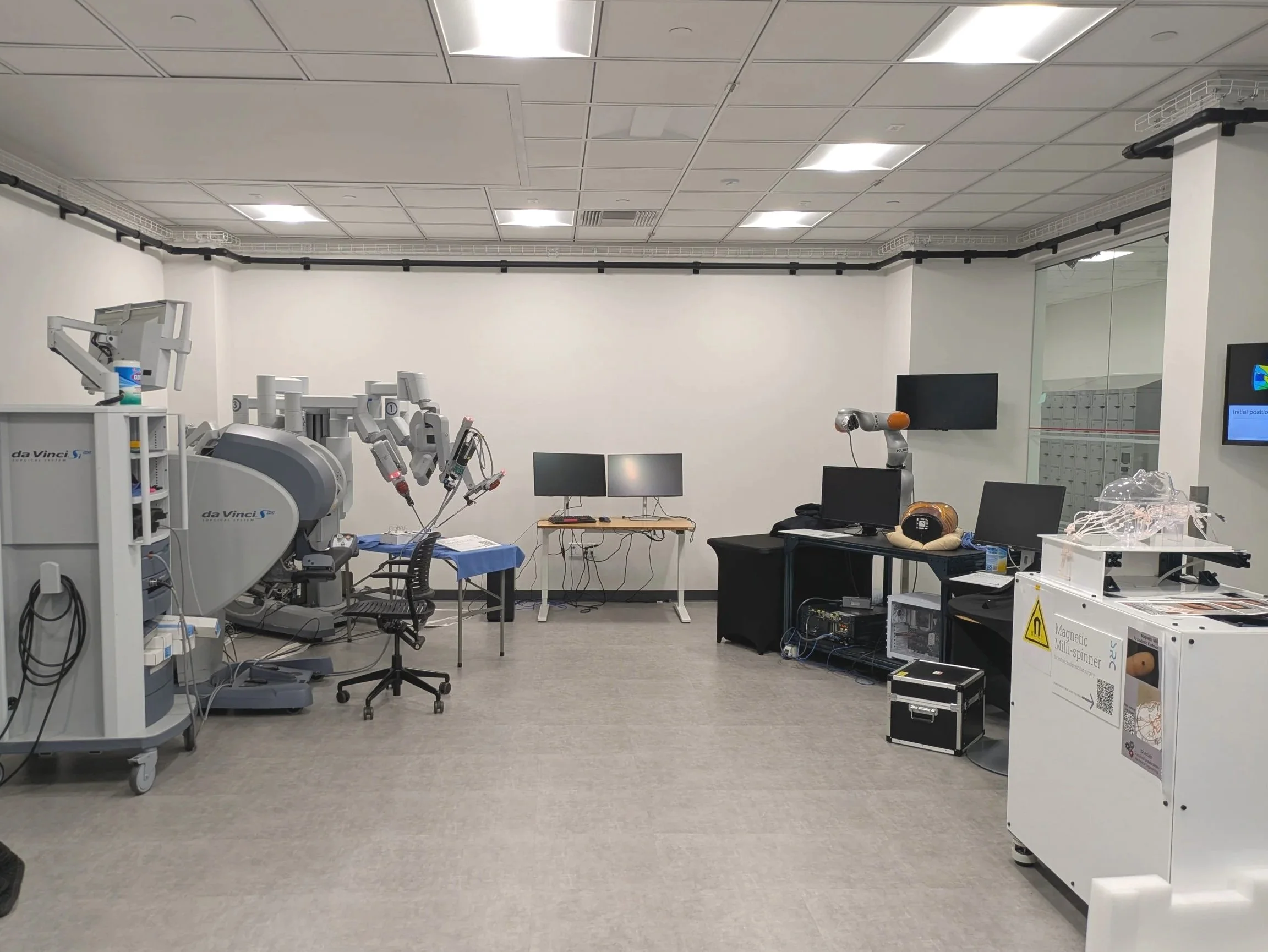
Research Bay:
Medical Robotics
Medical Robotics

ADVANCING HEALTHCARE THROUGH ROBOTICS RESEARCH
Ongoing projects aim to enhance surgical accuracy, optimize healthcare, and evaluate the impact of robotics on patient outcomes.

Collaboration with healthcare institutions and industry affiliates will continue to ensure that innovations align with clinical needs and practical applications.
Research efforts will aim to refine robotic precision, enhance system adaptability for various medical procedures, and incorporate research into actual medical practice.
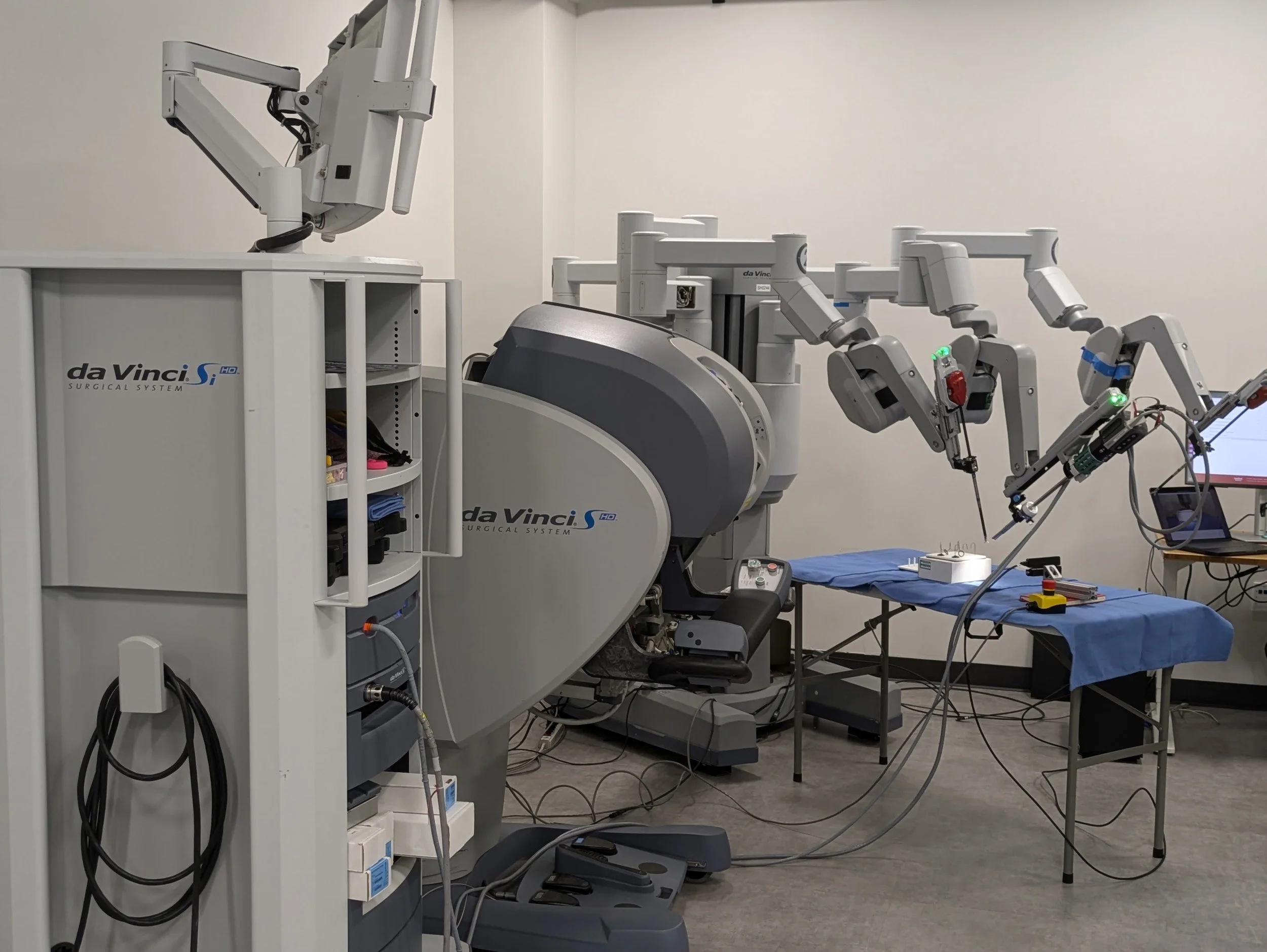
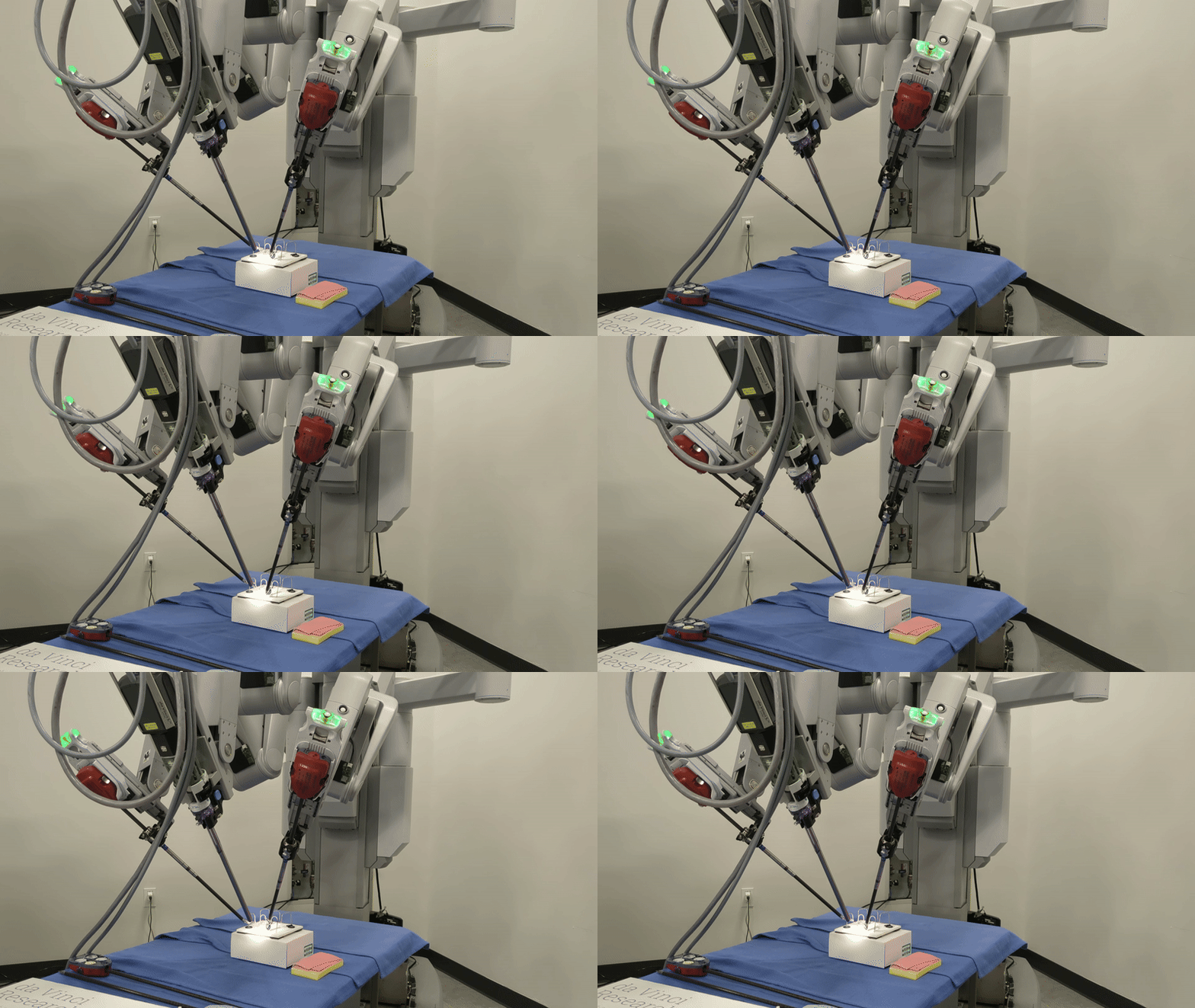
The da Vinci Research Kit
Recent research at the SRC has focused on investigating how surgeons learn to use robotic surgery tools, better ways to sense and feel forces during surgery, using AI to estimate force without extra sensors, and developing new tools to improve touch feedback in robotic systems.
PI: Allison Okamura
MEDICAL ROBOTICS: PROJECTS
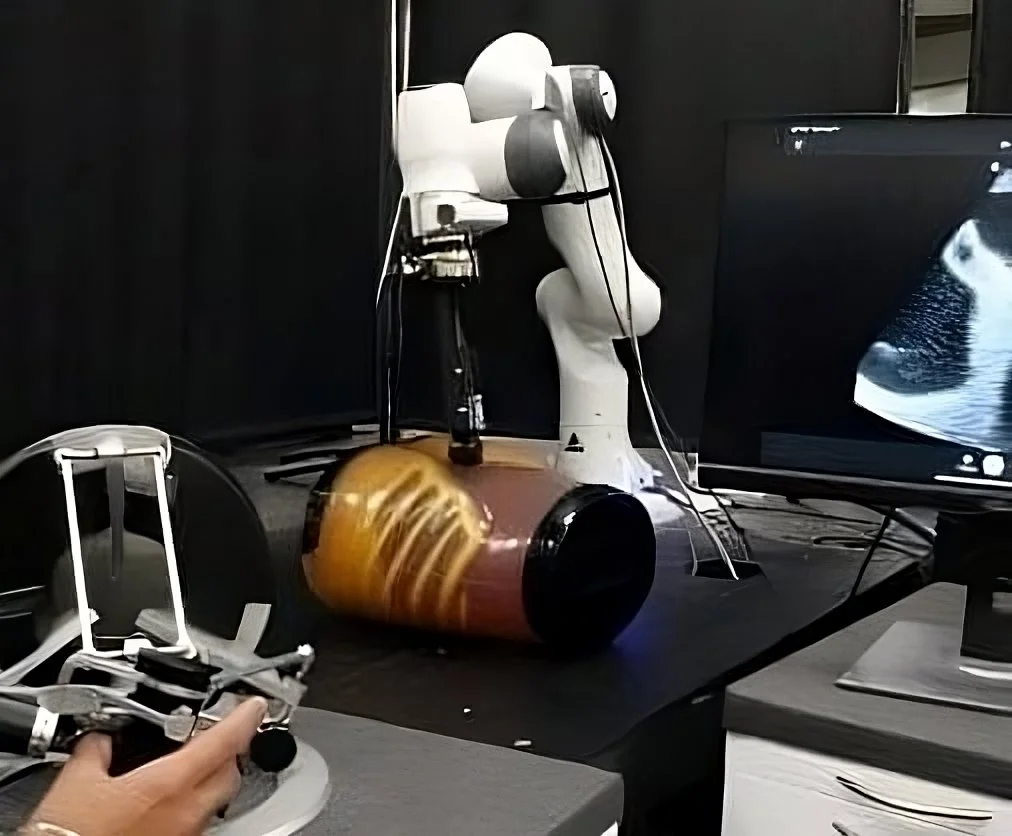
Remote Ultrasound with Haptic Feedback
The Remote Ultrasound is a robotic platform developed to enhance the accessibility and efficiency of diagnostic imaging.
Ultrasound is celebrated for its safety, portability, and cost-effectiveness, yet its reliance on highly trained technologists has limited its deployment in rural and underserved areas.
By integrating a robotic manipulator to house and maneuver the transducer, this system overcomes staffing challenges and the ergonomic issues associated with manual probe handling.
PI: Oussama Khatib
Magnetic Milli-spinner
Origami Robot’s folding and unfolding mechanism pumps liquid medicine, while its spinning motion allows it to transport small solid objects. This combination of movement and task performance makes the millirobot useful for minimally invasive medical treatments. It can be controlled inside the human body to deliver medicine to targeted areas, minimizing the need for widespread medicine distribution.

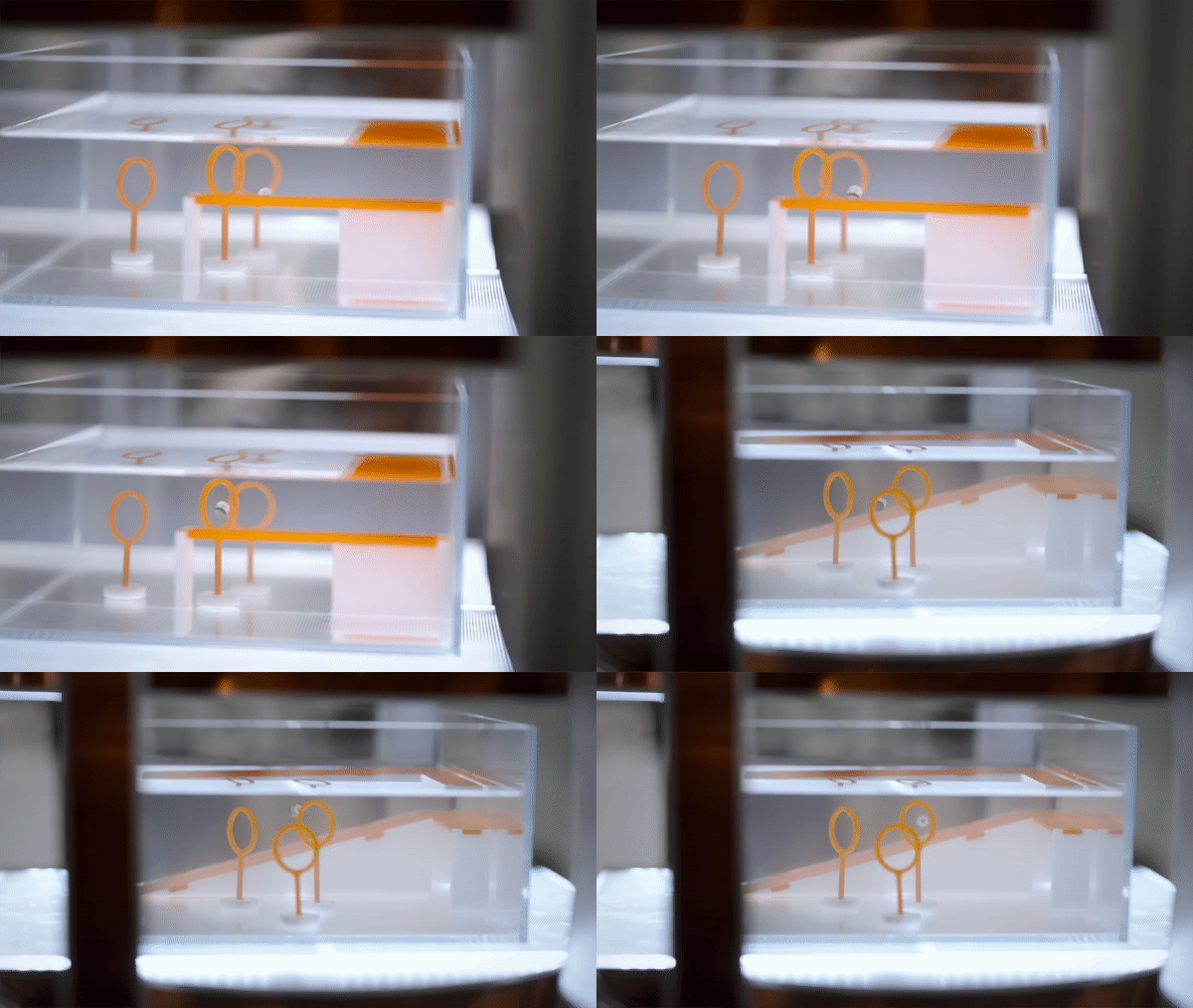
At the SRC, a PlayStation 5 controller connected to a Helmholtz coil system is used to steer the millirobot through an underwater course.
PI: Renee Zhao
Amphibious Magnetic Origami Robot
This project introduces the milli-spinner, a small, magnetically actuated robot designed for rapid movement and medical intervention inside blood vessels. Its hollow body, equipped with helical fins and slits, creates a unique flow pattern that propels it efficiently.
The milli-spinner moves at speeds of 23 cm per second, making it the fastest untethered magnetic robot for navigating tubular environments. With its ability to move precisely and perform different treatments, it could improve how vascular diseases are managed in the future
