
AI advances robot navigation on the International Space Station
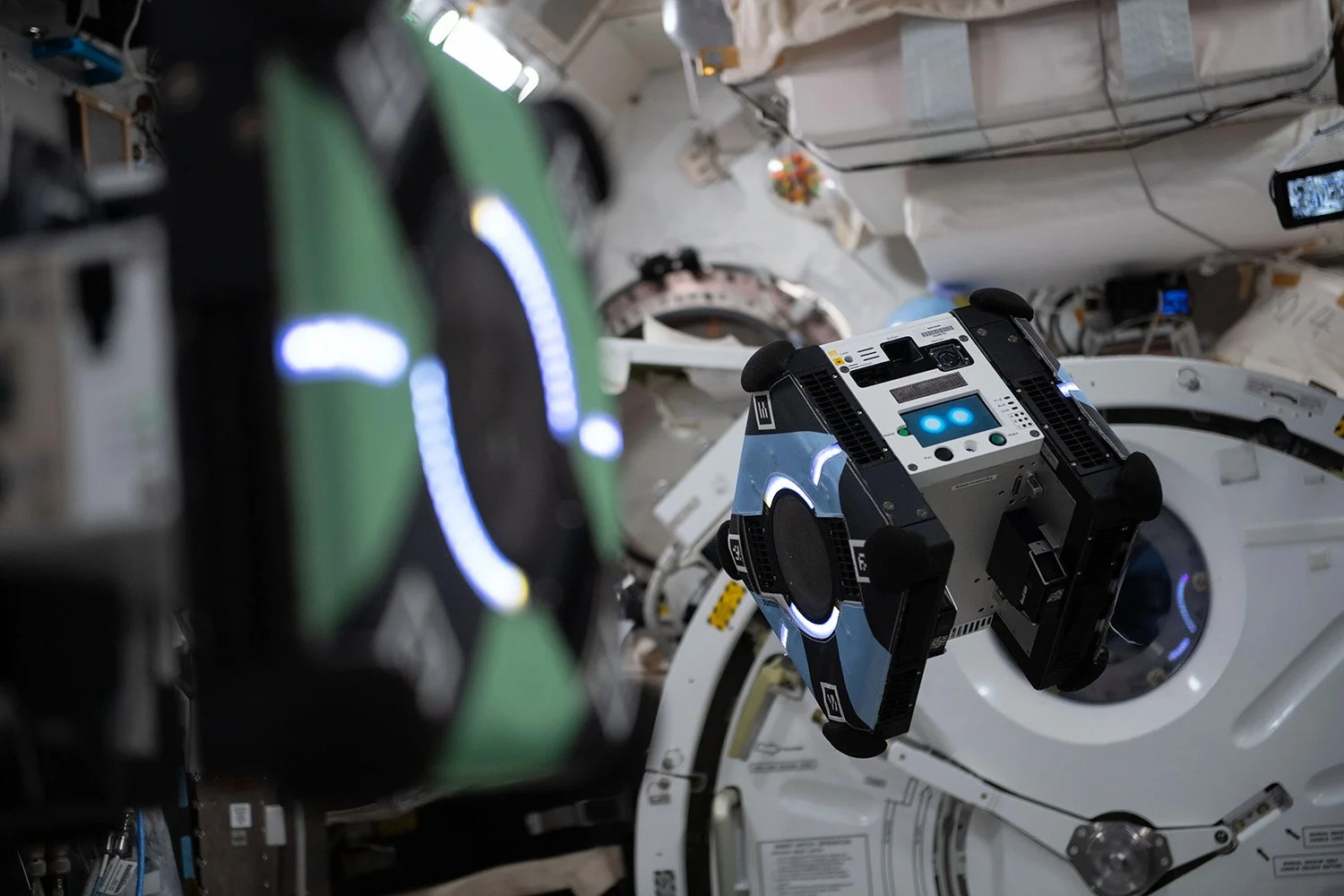
Meet Astrobee, a cube-shaped, fan-powered robot designed to autonomously navigate the International Space Station with a future set on “floating through the tight corridors of the International Space Station (ISS), quietly moving supplies or checking for leaks – all without an astronaut at the controls.”
“This is the first time AI has been used to help control a robot on the ISS,” said Somrita Banerjee, lead researcher who conducted this work as part of her Stanford PhD.
New research, published in and presented at the 2025 International Conference on Space Robotics (iSpaRo), introduces a system designed to significantly advance Astrobee.
“The flight computers to run these algorithms are often more resource-constrained than ones on terrestrial robots. Additionally, in a space environment, uncertainty, disturbances, and safety requirements are often more demanding than in terrestrial applications,” said senior author Marco Pavone, associate professor of aeronautics and astronautics in the in the School of Engineering, director of Stanford’s Autonomous Systems Laboratory, and SRC Executive Committee member.
Read the full story by Cassidy Beach here:
https://news.stanford.edu/stories/2025/12/ai-robot-international-space-station-autonomous-missions
Photo: NASA