
In the News
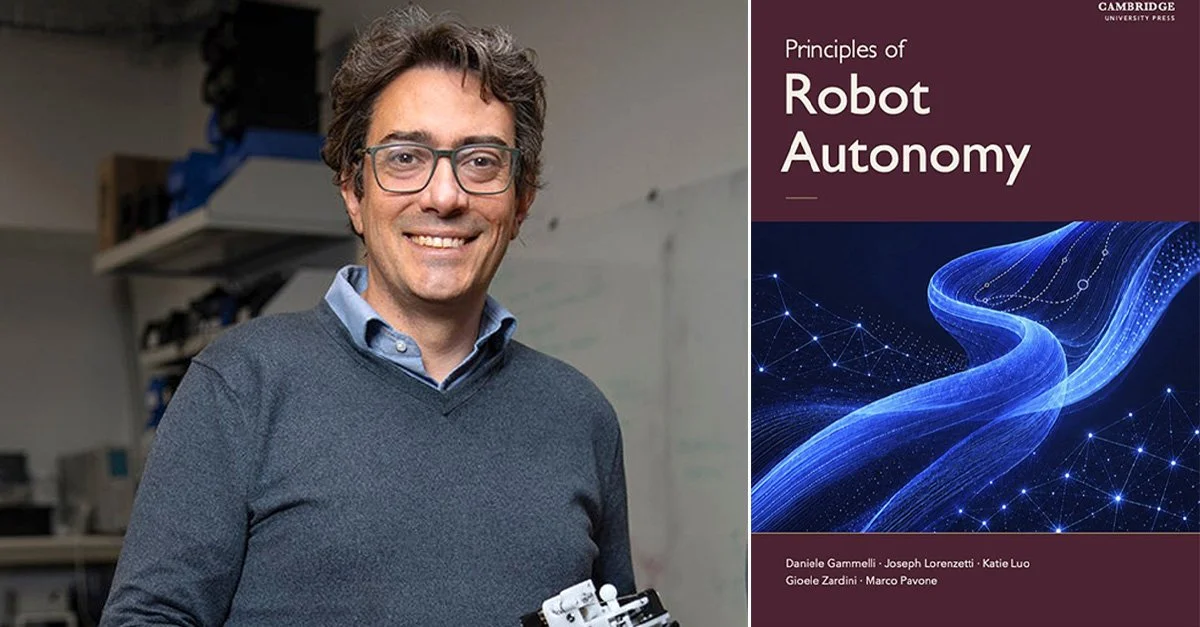
Marco Pavone, SRC Executive Committee member, has co-authored Principles of Robot Autonomy (PoRA), a new textbook based on a Stanford course series which features videos, homework assignments, open-source code, and more. The book is also available freely online.
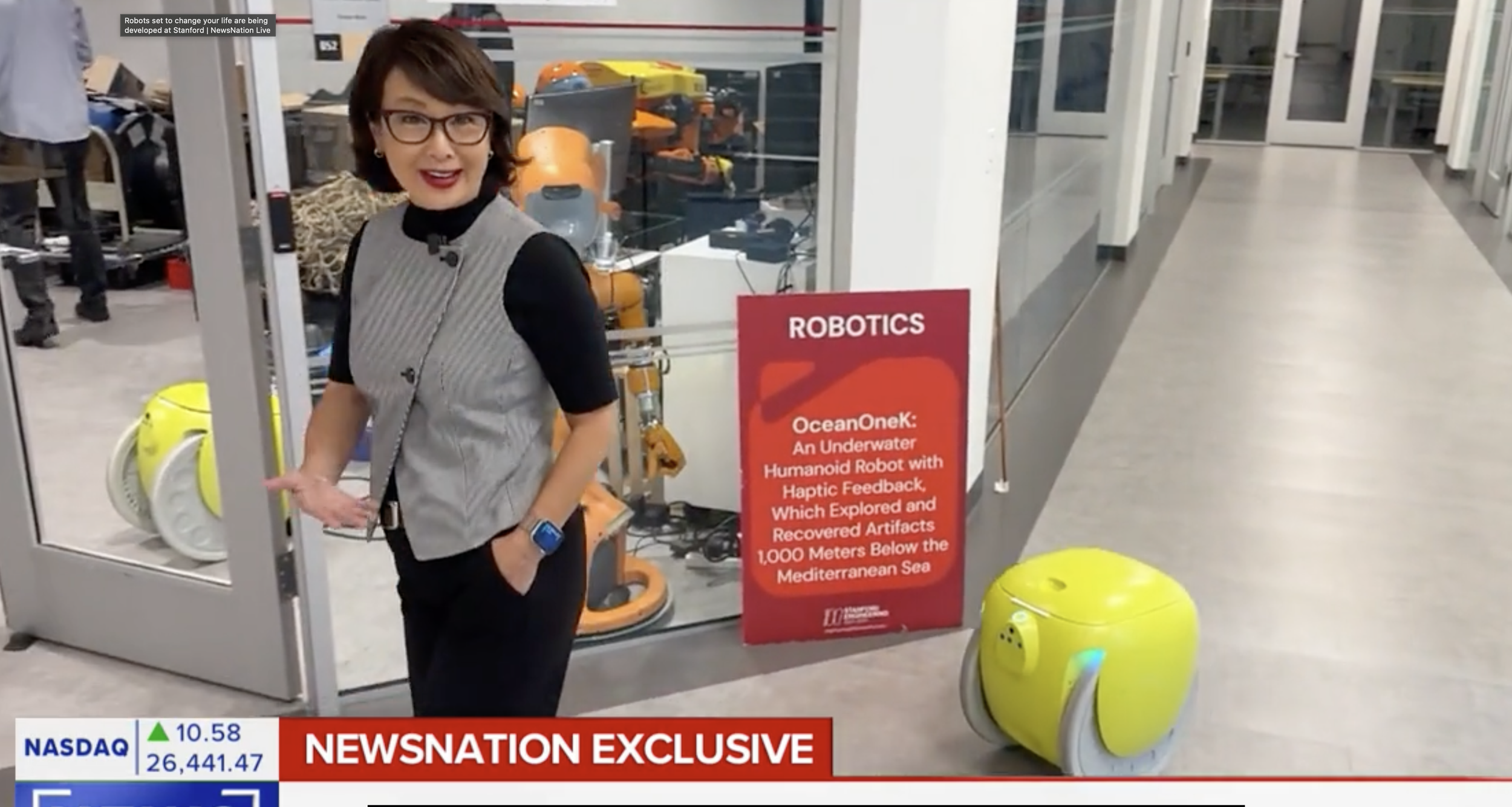
WAG, TidyBot, gitamini, and Steve Cousins were featured on NewsNation! Steve discussed the SRC’s mission to develop robotic solutions that help meet the needs of older adults.
Marco Pavone on what lies ahead for autonomous vehicles and the road to technological breakthroughs that made it all possible.
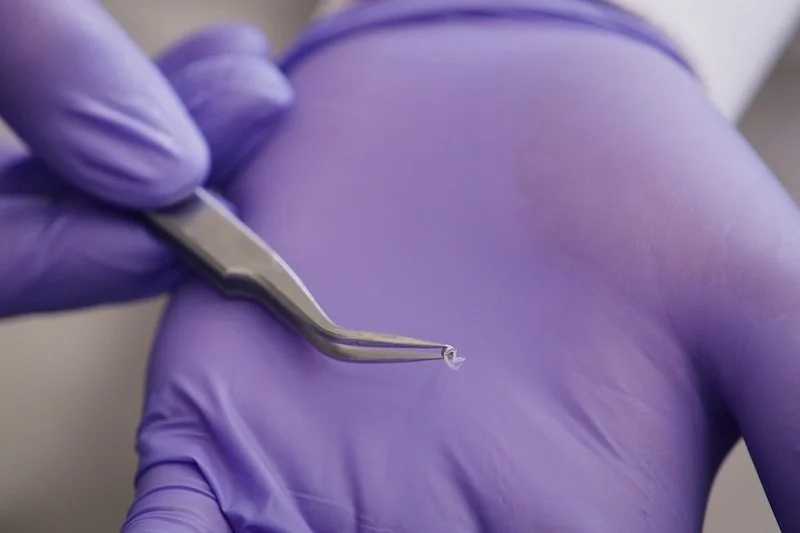
The magnetic milli-spinner is a tiny untethered microbot that can autonomously navigate through blood vessels under magnetic actuation and mechanically treat blood clots by compressing and shrinking them in place. | Stanford Engineering Center for Global & Online Education


Panel Discussion at the Stanford Robotics Center
From Foundation Models to Working Robots: What It Actually Takes to Close the Gap


SRC Director, Steve Cousins, represented the SRC at the 2025 World Economic Forum in Davos


The Stanford Center on Longevity’s magazine highlights the SRC in an article titled “The Robots Are Coming (Don’t Panic)”


Marco Pavone, associate professor of aeronautics and astronautics in the in the School of Engineering, director of Stanford’s Autonomous Systems Laboratory, and SRC Executive Committee member on advances in AI advances robot navigation on the International Space Station


Fei Fei Li and Yeijin Choi make the 2025 TIME100 AI list of the 100 most influential people in AI

