
SRC Faculty received ARPA-H award for AI-powered micro medical robot research
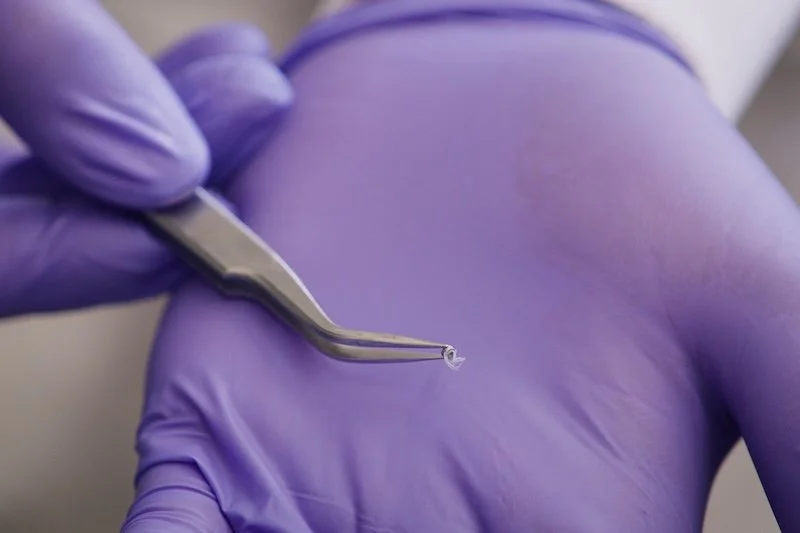
The magnetic milli-spinner is a tiny untethered microbot that can autonomously navigate through blood vessels under magnetic actuation and mechanically treat blood clots by compressing and shrinking them in place. | Stanford Engineering Center for Global & Online Education.
SRC Faculty Renee Zhao, Monroe Kennedy, Oussama Khatib and their collaborators have received an up to $27.2 million, 5-year award from the Advanced Research Projects Agency for Health (ARPA-H) Autonomous Interventions and Robotics (AIR) program to develop an AI-powered autonomous micro-robot that can be placed and guided by surgeons to swim through the bloodstream where it can treat blood clots and aneurysms.
The team envisions a future where life-saving endovascular treatments become available to far more patients by enabling robots to reach disease sites that today’s catheter technologies can’t.
“This project brings together mechanics, robotics, artificial intelligence, medical imaging, and clinical medicine to create something that no single discipline could achieve alone,” Zhao said.
Read more in Stanford Report.